Archive by Author

Big planting on a frost-free weekend

15 Apr

Seeds and plants and replants…BLAMO!

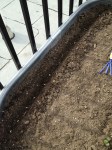
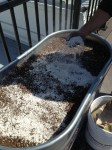
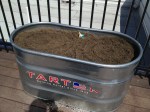
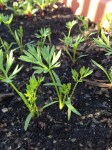
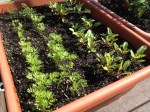
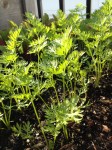
I put my seed tape to work this weekend. Using Farmer Russell’s earlier guides, I made little furrows to plant the seed tape, probably about 3/4″ deep. I kind of mixed the tapes up a bit, so I will have a few of each kind of carrot scattered all over. Covered those puppies up, and voila! Also planted basil in the middle “V” shapes in the carrots. Purple string beans in the other tank.
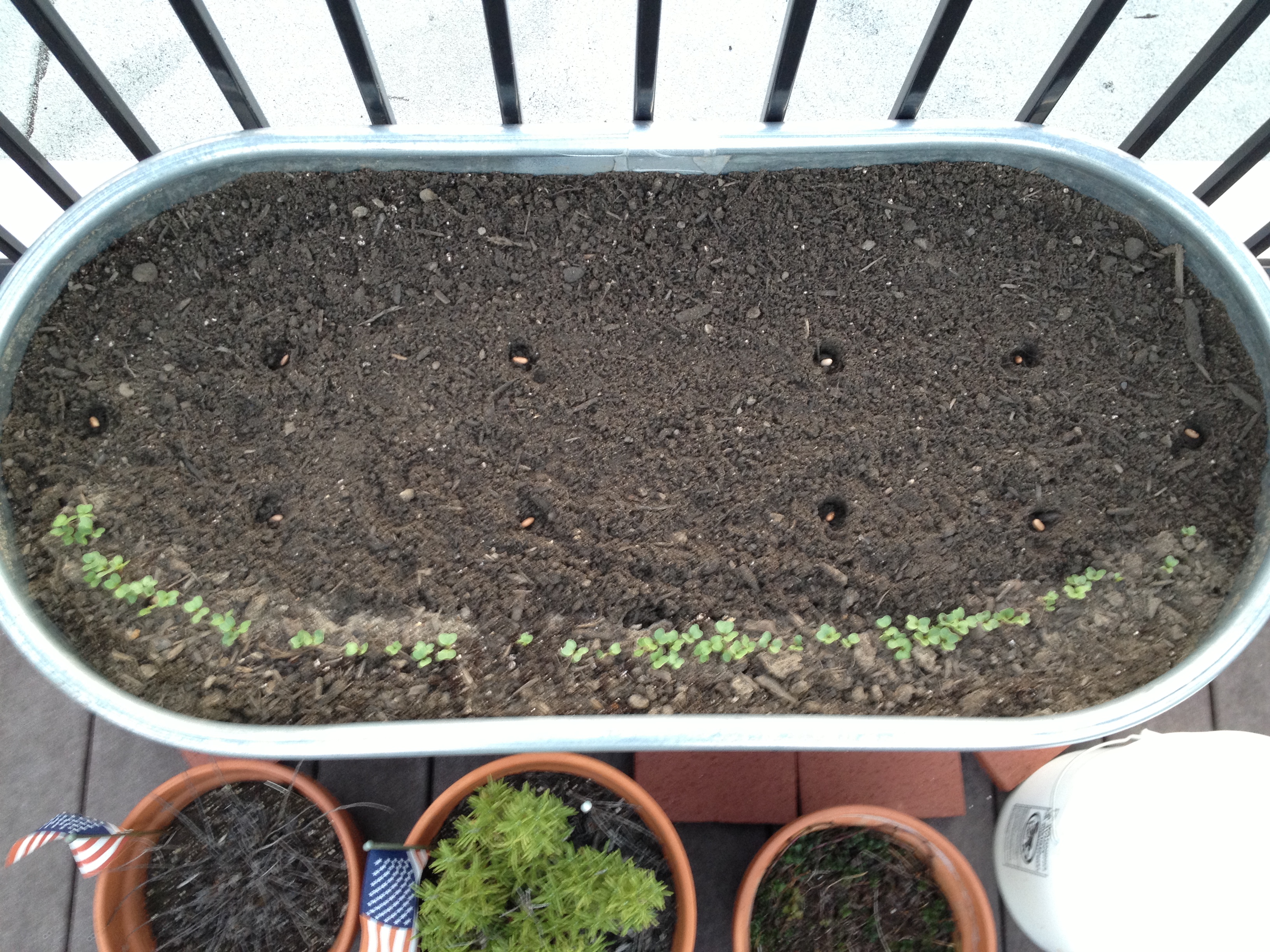
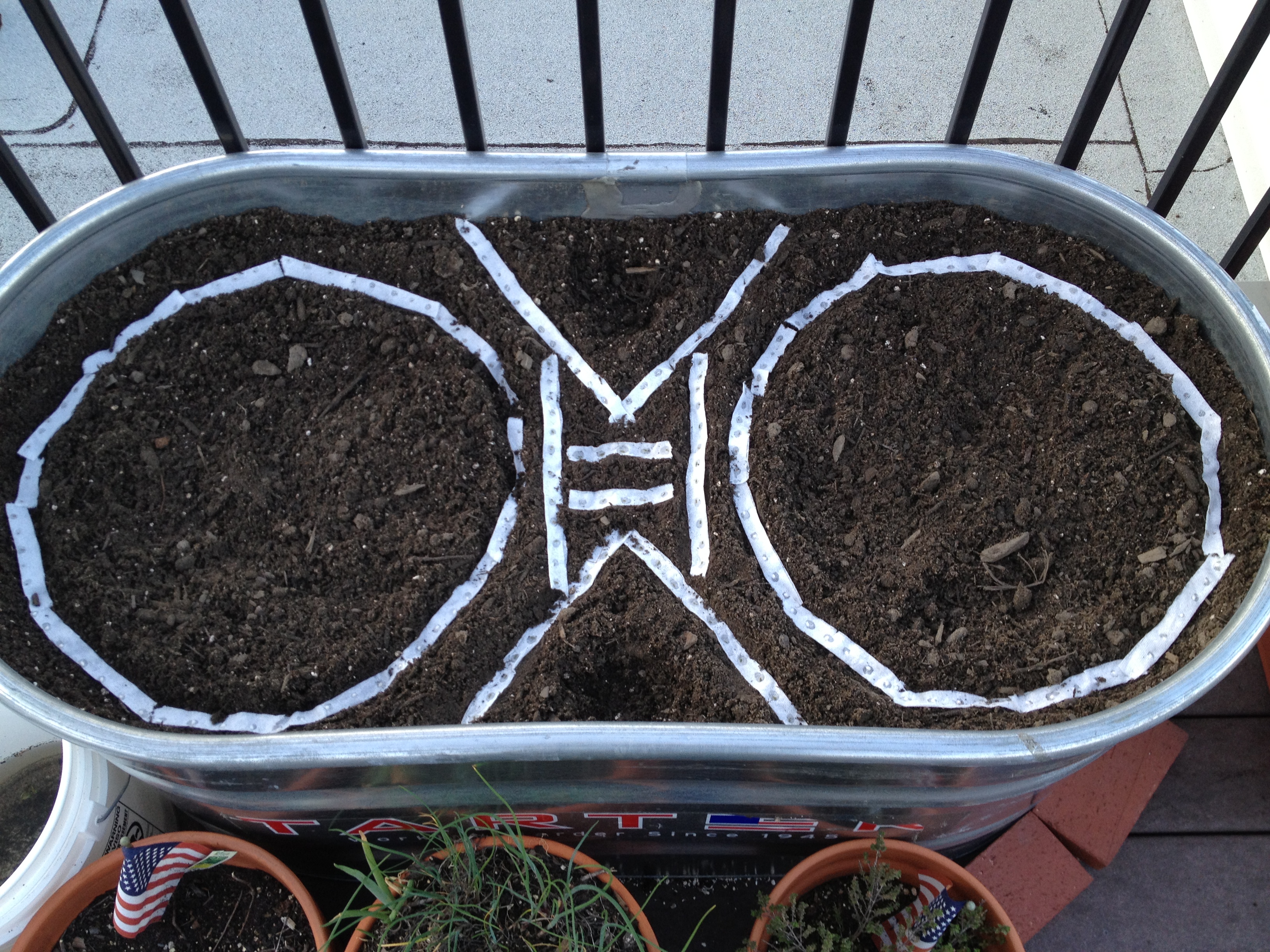
IMG_7385IMG_7384


On Sunday my friend and I went to a garden center to get some plants. To protect her anonymity, I will call her “ShmErin” here. (Her actual name may or may not sound similar…I’ve always wondered if articles that say names have been changed actually do use real names, and say that just to throw you off.)

IMG_7388

We each purchased a $20 for $40 Groupon deal from  Garden World of Virginia and  found some nice stuff. Also the staff was very helpful. Remember…SUPPORT YOUR LOCAL ECONOMY! I was fascinated by the water fountain things, but so were a pair of adorable twin two year old boys.

Aside from several bags of organic potting soil, I picked up a packet of cucumber seeds and live plants.

  • Oregano (to replace my dead plant)
  • Parsley (to replace the other dead plant)
  • Cilantro (for my rabbit, not me. I think cilantro tastes like soap. Ew.)
  • Red bell pepper
  • Jalepeno pepper
  • Two orange marigold plants that I don’t know what to do with yet.
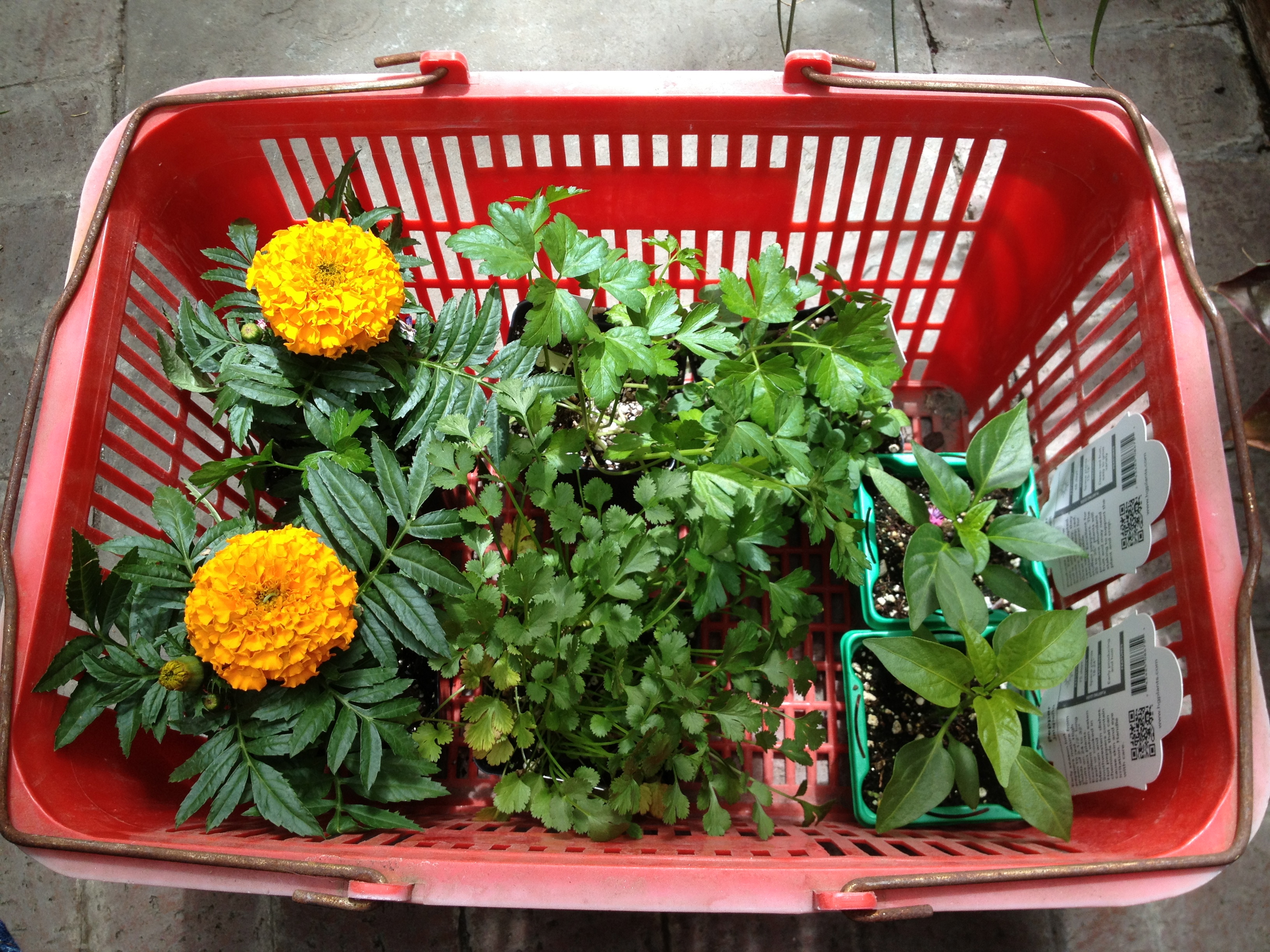
IMG_7391

We went home and got to work!

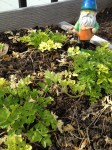
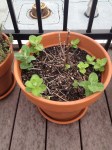
First, I put the peppers in one of the old tomato boxes with the parsley and cilantro. Easy. Looks good. Then, I took a chunk of chives for ShmErin’s growing herb garden. I originally planted these chives from seed in 2011, so I was very happy that they were still alive and doing well and that I could share them. Then I moved the chives and onions to the second former tomato box so they are alone. Farmer Russell just posted a few words about companion planting on his Tumblr…gotta be careful with alliums. Some plants don’t mind being near them, others will die. I decided to just keep them in a separate container. I’ll probably plant a few more rows of green onions this week, too.  The ones in there now were also planted in 2011 and have come back each year. Also, he cautioned not to plant the marigolds near the beans. The will act as a natural herbicide and then…no more beans. They’re great near tomatoes, though! I will probably put them near the tomatoes. Next, several of my potted herbs needed a bit of a, shall we say…pick me up? I removed the thyme and chocolate mint from their containers, loosened up the roots, which were absolutely packed, added some new potting soil to the bottom of the pots, replaced the plants and filled in around them with more soil.

Finally, a row of cucumber in the back of the second tank. They will be trained up some bamboo sticks I have, and then eventually they can hang over the fencing. At least that’s the plan now.

Then, ShmErin watered! A lot. We carried up a ton of water. Either a ton or about 40 pounds in total. Then we celebrated with cocktails on the roof. Then I came up later in the evening and watered everyone one more time. Then it rained early this morning. That was awesome.

I felt like Mother Nature had approved of my planting. Win.

OCD gardener plants seeds!

10 Apr

Time for planting!

Organized planing!

All in a row!

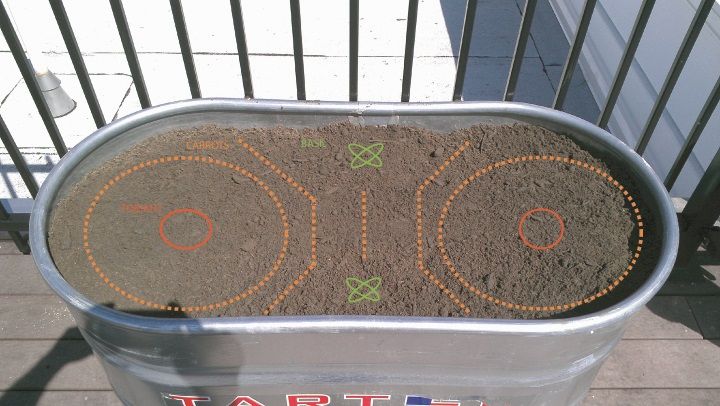
Here are Farmer Russell’s plans for each of my tanks. They have a decorative element to the design, too.

First tank is tomato, carrot, basil.

first tank design

Second tank is cucubrits beans, nasturtium.

second tank design

For the carrots, I made seed tape. Last year I just dropped seeds into a little trough I made with my finger. It worked well, but I had to thin them on a regular basis. Tape is great for little tiny seeds that are hard to see once they go into the soil, and they’re spaced well enough that you have to thin much less and therefore waste fewer seeds. I had used seed tape in the past, but I hadn’t thought of using it for the roof. Seed tape is also expensive, and you’re limited to the varieties available. Russell suggested I make my own tape. I used this as a quick how-to. The whole thing was very simple.

You’ll need:

  • Seeds
  • Toilet paper
  • Wax paper
  • School glue, or just thin regular white glue with some water.

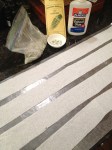
Take an 18″ piece of toilet paper, fold it in half, then in half again so it’s about 4.5″ long, then in thirds lengthwise. Open the paper and separate the layers making 6 strips.

Lay out a piece of wax paper. Put drops of glue about 1″ apart on the paper, then drop one or two seeds on each drop (I did only one.)

Carefully fold the paper over on the seeds and gently press, encasing the seeds.

Let the strips dry and then carefully peel off of the wax paper. You can roll them up and store them in a baggie or container.

To use, just make a little trench at the depth specified on the seed packet and lay the strip in it. Cover and water. The glue and toilet paper will dissolve.

New year, new garden. Just add water!

8 Apr

Welcome to 2013! This will be a bit of a long post, but it’s somewhat instructional.
I began construction on the new, improved roof garden yesterday. With the help of Richmond, VA based Farmer Russell, a sustainable agriculture consultant and recently reformed farmer (who is new to Tumblr,) I have made some significant upgrades to my growing spaces. A bit about the expert brain I’m going to be picking this season (so you know my info below is legit, finally.) My friend Farmer Russell has been sustainably growing gourmet produce for the more the a dozen years. He has run CSAs in the Richmond area and has spent the last two years providing James Beard nominated chefs with the the finest in farm to table produce. He is now sharing his years of hard won wisdom with everyone from backyard gardeners (like me!) to farmers looking to grow more sustainably on thousand acre spreads and organizations looking to learn more about how local food and conscientious consumption can impact their community throughout the mid Atlantic.

He also makes some really good home brew and talks about it on Twitter.  Mmmm…beer.

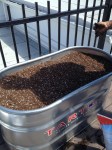
Anywhoo, here is the finished garden after we cleaned up. So far, so good!IMG_7279

If you’ve read my previous posts, you know that my two biggest issues were space and water. My plants really weren’t in containers that were deep enough for their root systems to properly expand. It caused the plants stress and basically stunted their proper growth. Also, water. >sigh< These new containers should really take care of both problems. We calculated these weigh approximately 160 lbs each, so that’s like a person size, but spread out over a much larger area. With the right amount of water, each should weigh about 220-240 lbs, which, again, is spread out over a large area. (1 gallon of water = appx 8 lbs.)

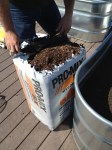
I started off with two 2’x2’x4′ 100 gallon galvanized stock tanks from Southern States. They are about $90 a piece, which is actually cheap when you consider that the two buckets I’ve had my tomatoes in for the last two years were around $60 each.  Also from Southern States I picked up a big thing of ProMix growing medium for about $37. Everything had to picked up at the store. Total was about $227

Then, a visit to Home Depot…IMG_7238

  • Two bags of lava rocks at $3.87 each
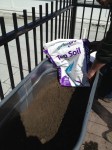
  • Six bags of top soil (this wasn’t the brand, but the price is the same, $1.37)
  • Two bags of humus & manure for $2.97 each.
  • Two tomato stakes because I had two already but really thought four would be better, considering how big the plants got last year.
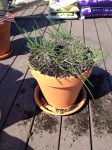
  • 12″ terracotta pot and saucer to temporarily replant my chives. The most expensive part of this trip, at around $8
  • Bunch of bricks I’m not going to use. I thought I would elevate the tanks, but that would have just created some pressure points in the tank and on the deck. Farmer Russell told me not to get them, in his defense. I still thought it was a good idea. I was not correct. But, now I have some bricks.

Home Depot total with tax: $48.84.

Total, before plants: $325, including VA sales tax. Yours may vary slightly, especially if you don’t get those stupid bricks. Argh.

Then we got to work!

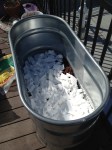
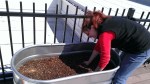
We removed the metal plug from the drainage hole in the tank. Really, that’s a great feature. I’ve seen a few posts where people drill additional drainage holes into the bottom and sides of the tanks, but all you’re doing is damaging the coating which can lead to rust and leaching of whatever might be in the metal. Keep the coating in tact! Farmer Russell says just remove the plug and follow the steps below to properly layer and you’ll have no problem.

In order, then some pictures.

  • Lava rocks piled on top of the drain hole. For drainage and improved water flow on the bottom of the tank.
  • Styrofoam. Also for drainage and reduces weight. We went about 1/3 up the tank with this styrofoam, which I just happened to have saved in big sheets from some furniture I bought a few years ago. (HA! AND YOU CALLED ME A HOARDER! WHO’S LAUGHING NOW?) You can also buy a big bag of peanuts from an office supply or shipping supply store, but why not reuse what comes in the mail and packaging materials?
  • Remainder of potting mixture from the old buckets. Reusing what I can!

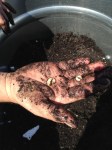
We also found some grubs in one of the tomato pots. They made their way down there some time over the winter. I insisted that we toss them. Then I threw up a bit in my mouth.

Next, add the following layers, making sure each one is free of clumps and even.

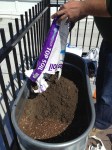
  • Layer top soil
  • Layer promix
  • Layer top soil
  • Layer humus/manure

Then…

  • Layer of promix
  • Layer of oyster shell – don’t need a lot and it will slowly add calcium and other good stuff over time.
  • Layer of top soil

Don’t mix the layers now. The mixture will settle and compact on its own, and the plants will be able to break it up.

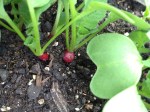
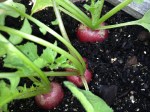
Finally, Farmer Russell sketched out where plants should go. Tomatoes, carrots and basil in one tank, possibly beans, radishes, cucumber, melon in another. He is creating a more detailed layout for me now. I will post that when it is ready. We did plant a row of radishes while we were up there. They’ll be ready in a few weeks.

Winston and his lazy cousin are keeping watch, as usual.

Herbs will remain in separate pots, and the onions and chives will probably get broken up and replanted into one of the former tomato buckets with new planting mix. I’m going to do some research and see what companion plants will work well with them in the bucket.

Whew!

Water…It’s what plants crave! (And you thought it was Brawndo.)

3 Apr

So, I have no direct access to water on the roof.

Now you’re thinking:

  • Attach a hose to your outdoor spigot? (Can’t! Don’t have one!)
  • Uh, attach a hose to your faucet and send it up through your window? (Highly impractical. I’d probably need about 150′ of garden hose…and it would go across my living room…and I’d have to leave my window open.)
  • Get a rain barrel and hook it up to the gutter? (Can’t! Condo building…not allowed.)

As I mentioned a few posts ago, I’d been carrying water up to the roof from my kitchen a few hours after filling a 2 gallon watering pail. While it might make for some good weight lifting, it’s exhausting and not very efficient. Plus, those plants are THIRSTY up there with no shade in the heat of the summer. That means several trips back and forth. That was all of 2011.

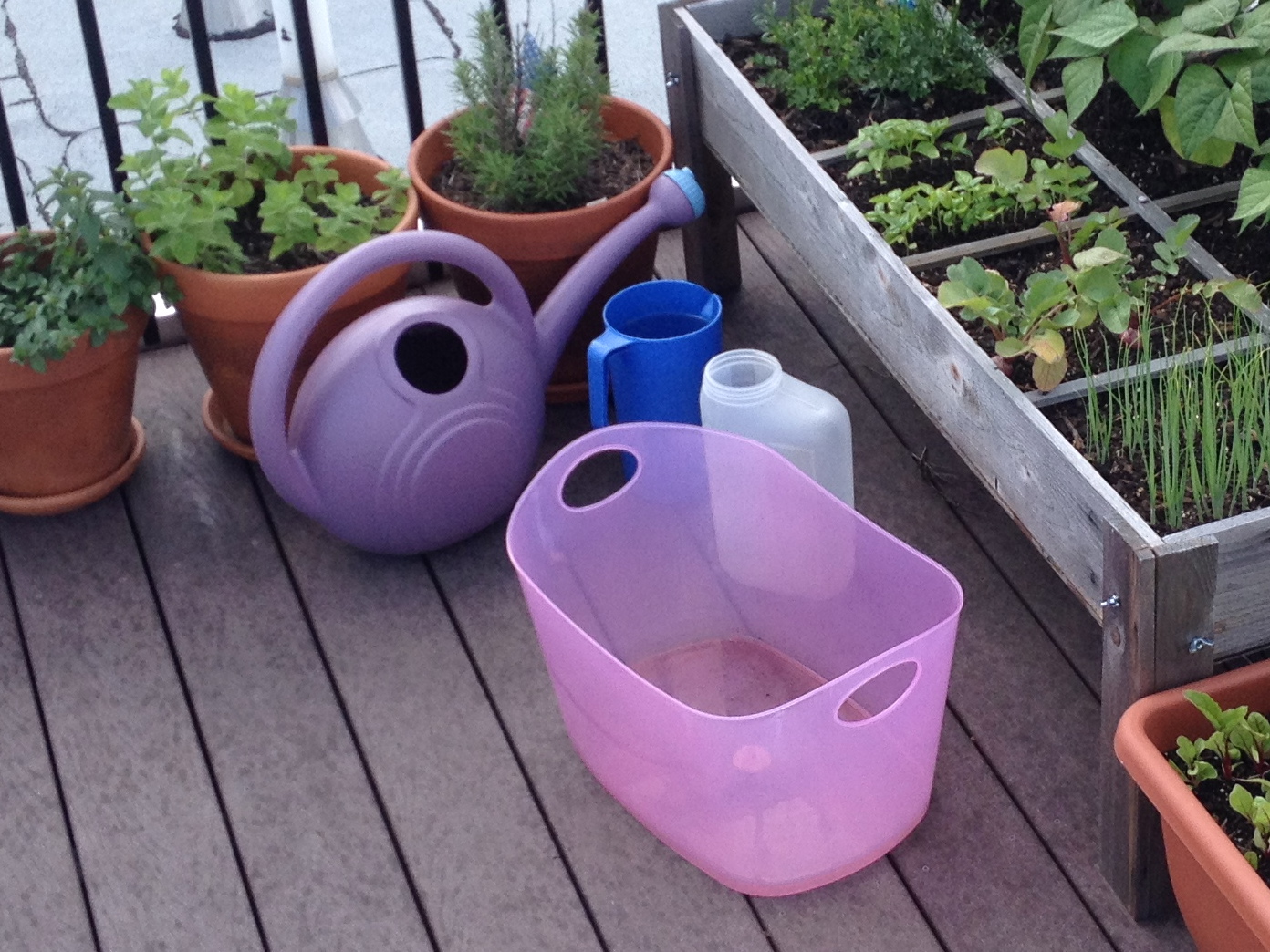
There had to be a better way! In 2012 I started to collect water from the bottoms of the 3 gutters I could reach during a rain and dump it into a 5 gallon pail. A few problems with this method:

  • The bottom of the gutters are about 6″ from the deck, so I need a small containers to collect the water. (See below…I also used a quart sized yogurt container.)
  • Small containers don’t hold a lot of water = many trips to the big 5 gallon bucket. I had a flexible bucket that helped a bit, but I could only fill it about 1/4 of the way every time, maybe a gallon at the most. In the photo, it’s the pink one with the handles. It wound up cracking in the fall, probably because it’s not supposed to be abused as I had.
  • When the 5 gallon pail is full, it weighs about 40 lbs…that’s a lot for me, and it’s hard to carry a bucket of sloshing water.
  • I got sopping wet every time. (Umbrellas are not practical devices while harvesting water I learned after about 12 seconds.)
  • No photo of the 5 gallon bucket, for some reason, but I swear it’s there!IMG_4121

What was nice about filling up all of these container was I usually didn’t have to water for two days or so after collection because the garden drank up from the sky and the tomato buckets reservoirs were pretty full. But then we’d have several days of no rain….sometimes over a week and the bucket water would be used up in one fell swoop.

I also tried to make a bottle drip irrigation type of thing. It . You can find directions all over on the interwebs.

It worked, but not very well. I started with full bottles and well watered soil. The water was gone in a few hours, I’m guessing because it’s hot up there. (Have I mentioned that?) I did try it in late July, so who knows. I think this would work better for house plants. 😦

This year, however, I’m going to create some kind of rain sculpture thing for collection…not really sure how it’s going to look, but my other option is more buckets.

Or Brawndo.


2012 Recap – It’s Tomato Time!

21 Mar

The pride of the garden….the tomato.

cherry tomato on rooftop

I mentioned in my “About” section that my grandfather, who grew up on a farm in southern New Jersey, insisted that we didn’t have enough tomato plants and would add them to my mother’s rock garden, our front landscaping, and other various flower beds around the house where tomatoes….just don’t go. He also tried to grow them on fire escapes on the commercial building the family owned in lower Manhattan. Even without his additions, we always had nice tomatoes from our garden.

In 2011, I had four tomato plants, as you may remember from earlier photos. I went with red and yellow cherries, red grapes, and some other larger purple-y fruit. The three smaller plants did much better, but it was still a lot to work with. In 2012, I decided to stick with the small fruits, so I had only one cherry plant and one yellow pear tomato plant. They were all quite sweet and delicious, unlike anything from a plastic container at the grocery store.

These photos are from early May to mid June, 2012.

Yeah, so I picked off those suckers when I saw them. Didn’t really have any problems with bugs on the plants.

These photos are from early July to mid July, 2012. More on those glass bottles in my next post.

I was able to pick dozens of tomatoes every week starting about this time. My brother also got me a pasta machine for my birthday last summer. BAM! This is early August, 2012. I hand made or grew this entire meal….except for the cheese. (No cows on the roof just yet.)

IMG_4925

My tomatoes seemed happy on the roof. I’m pretty sure they’d appreciate some more root space, but all in all, I think this was a successful venture. They were still producing fruit into October, and then a few pathetic little ones after that every now and then. These photos are from mid to late September, 2012.

2012 Recap…In search of beta carotene

12 Mar

I don’t know where to start here. Maybe at the Carrot Museum? Though it exists online, the International Carrot Conference is real….and it’s in Madison, Wisconsin this August. Fascinating.

I don’t know how I’d get along with the pros, though. So here’s a gallery of my early rooftop carrots from mid May to early July, 2012.

Everything is moving along nicely, right? The swiss chard next to the carrots wound up not working out. The leaves were very, very bitter and didn’t like to be picked, or not to be picked. Quite possibly because they shouldn’t have been grown in a small container like that, but I was still curious.

These photos are mid July to early September, 2012.

In general, they were all pretty attractive carrots. Not the sweetest, but they were all crunchy, and I was proud. At that point, a few of them started to get really weird. These photos are mid to late September, 2012.

I wanted to see how long they would last in the box, kind of see if they’d rot in the ground or if they’d be ok through the winter. These photos are from mid January, 2013.

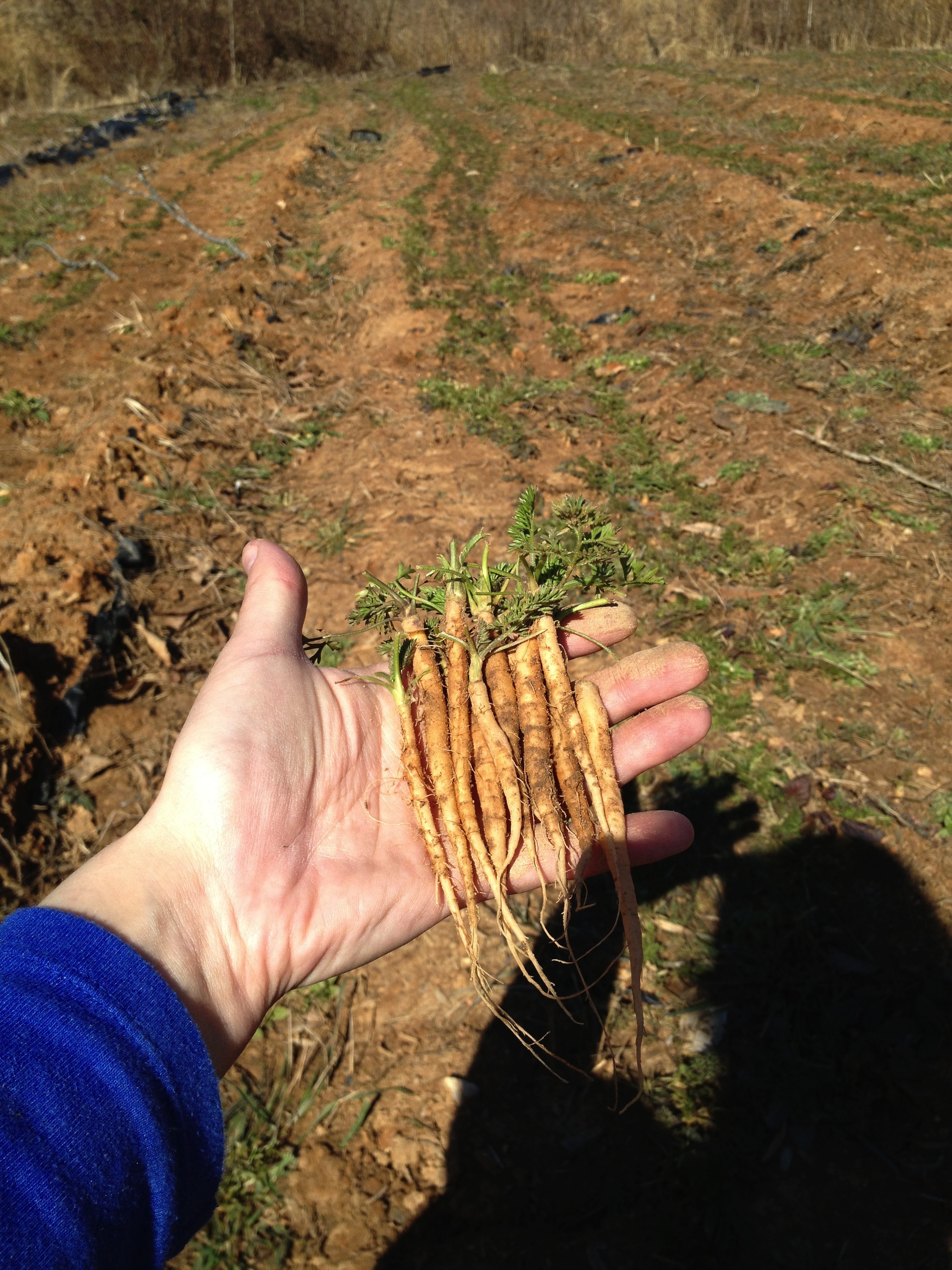
I visited a friend’s farm this past weekend in Mineral, Virginia. More on that in tomorrow’s garden update. Was given an assortment of carrot seeds that I will use this year.

Image

Here are some REAL carrots. We pulled up a few of them from the rows.


And of course, the obligatory Image 2altered photo using unnamed mobile device software.


2012 Recap…Herbal Issues

7 Mar

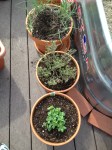
I thought herbs would be the least of my problems up on the roof. I was half right. So, earlier this week I wrote about the survivors, the herbs that wintered nicely and seemed to be alive in the spring.

One small snafu…I was away for about a week and the herbs didn’t get much water. I lost my thyme, so I replanted that one. photo 2Also, the rosemary got very dry and looked like it was about to totally kick the bucket. The main branches were nice and thick, so I thought it would come back to life eventually.

Here it is on May 9. —–>

IMG_4022And here it is a few weeks later on May 22. It did, in fact, grow back, and the hard, woody stems had some softer, white additions as well. I was happy with the regenerated rosemary. I knew it would be ok eventually, as the plant my mom has in New York now is probably ten years old, at least. Plus, in many parts of the Mediterranean I’ve seen them planted as shrubs.


Parsley also came back during the second year, however, we had some issues. Instead of lovely, soft parsley leaves, I was getting really thick, straw-like stalks, and it was flowering constantly. My rabbit enjoyed the stalks, but it wasn’t what I was going for. Eventually I got fed up and just pulled it all. They roots went all over the garden box, which I expected. I have since been told that the plant was likely stressed. Why? It didn’t have mortgage payments to keep up with or anything. Argh. Photos from mid May to late September, 2012.

I was given a similar opinion regarding the basil; it was stressed. I started them this season again from seed. The early plants looked lovely, with round, plump leaves. I thinned the plants as I always had as the weeks went on, but looking back on it they were probably too squished in there. Also a chance I didn’t pick enough of it. These photos are from mid May to late July, 2012.

Also, quickly, mint. Mint will never die. Ever.

EVER.

I got a second mint plant this year, so now I have common mint (kinda fuzzy leaves) and the newer chocolate mint, with more leafy leaves. The plants have both flowered several times and have faked death, too. They keep coming back, leggier and leggier each time. Again, check the earlier post for the first wintering comeback. These photos are mid May to late July, 2012.

2012 Recap – The Radish Diary

5 Mar

I decided to break up the 2012 updates by vegetable. Today, I will gloat about my red globe radish success. Spicy radish success. The seed packet said they are 28 days until harvest, and by golly, I think I picked the first one at 28 days. I was able to get two rounds of beautiful, crispy, super spicy beauties out of the 1’x1′ space they were allotted in 2012. Some nutritional info about these babies.

These photos are from mid April to mid May, 2012

I think I left the square empty for about a week or before replanting. Ate most of them raw with a bit of salt. Some on crusty bread with some butter. Some pickling addition in there, you’ll see in the second gallery. In addition to the radishes themselves, we also enjoyed the leaves chopped up in salad for a little punch with every forkful.

Radishes were successful. I was pleased. I will do them again in 2013. Don’t need a lot of space, grow quickly, pack a tasty bite.

These photos are from mid May to early June, 2012.

2012 Recap…The Survivors

4 Mar

Welcome to 2012! I thought about the garden all through the 2011-2012 winter. We didn’t get much snow, didn’t get TOO many cold days. I considered covering the garden with some hay (that my rabbit decided not to eat) or some of that gardening fabric, but I decided against it.

So, here we are in March, 2012. I was beginning to plan out what I’d grow in the summer, thinking about what worked and what didn’t in 2011. Here are the survivors…the herbs that lasted over the winter. Some were in their own pots, some were in the SFG box. See Winston there watering everything?

These photos are from March 19-25, 2012.

2011 “Harvest” Recap

28 Feb

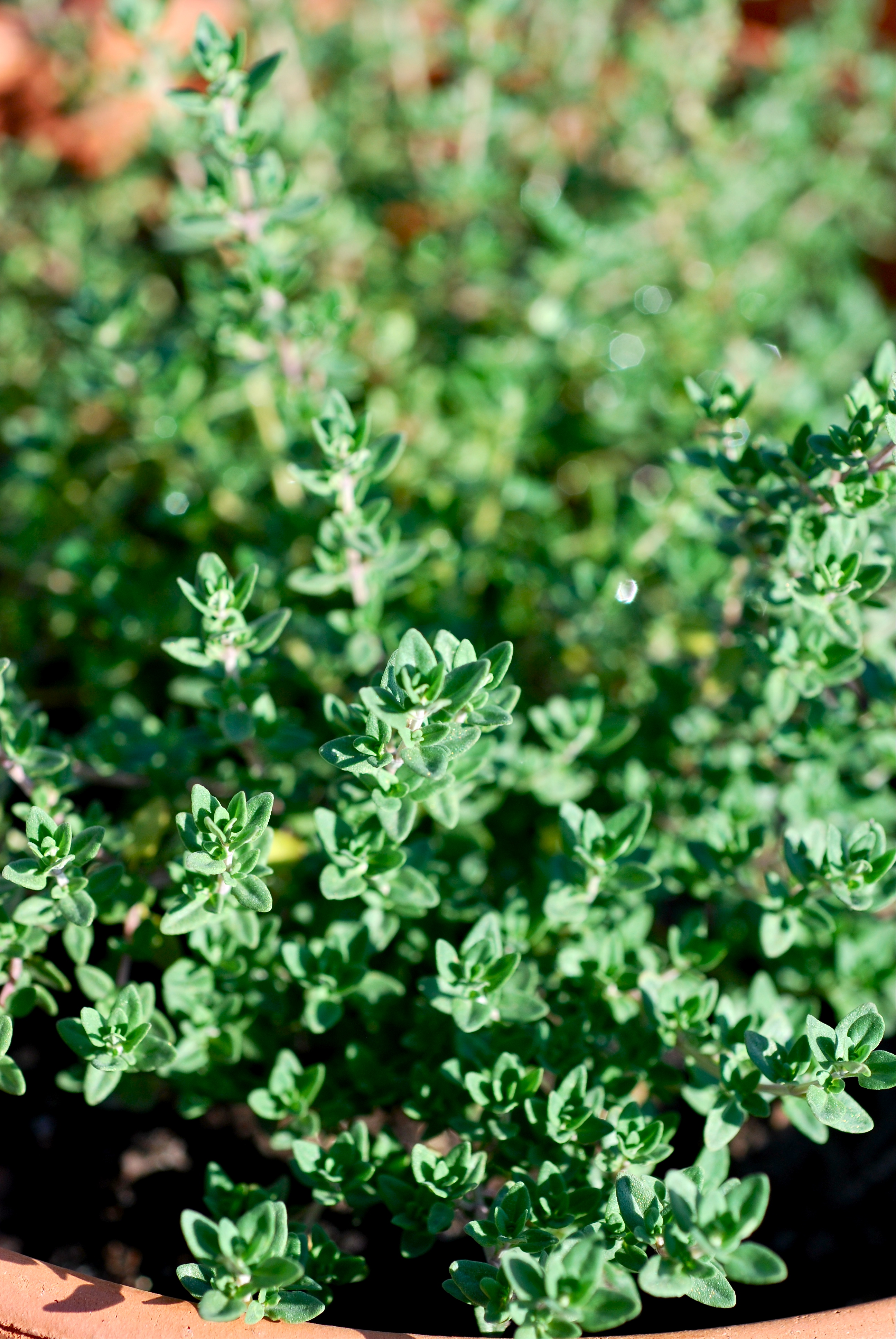
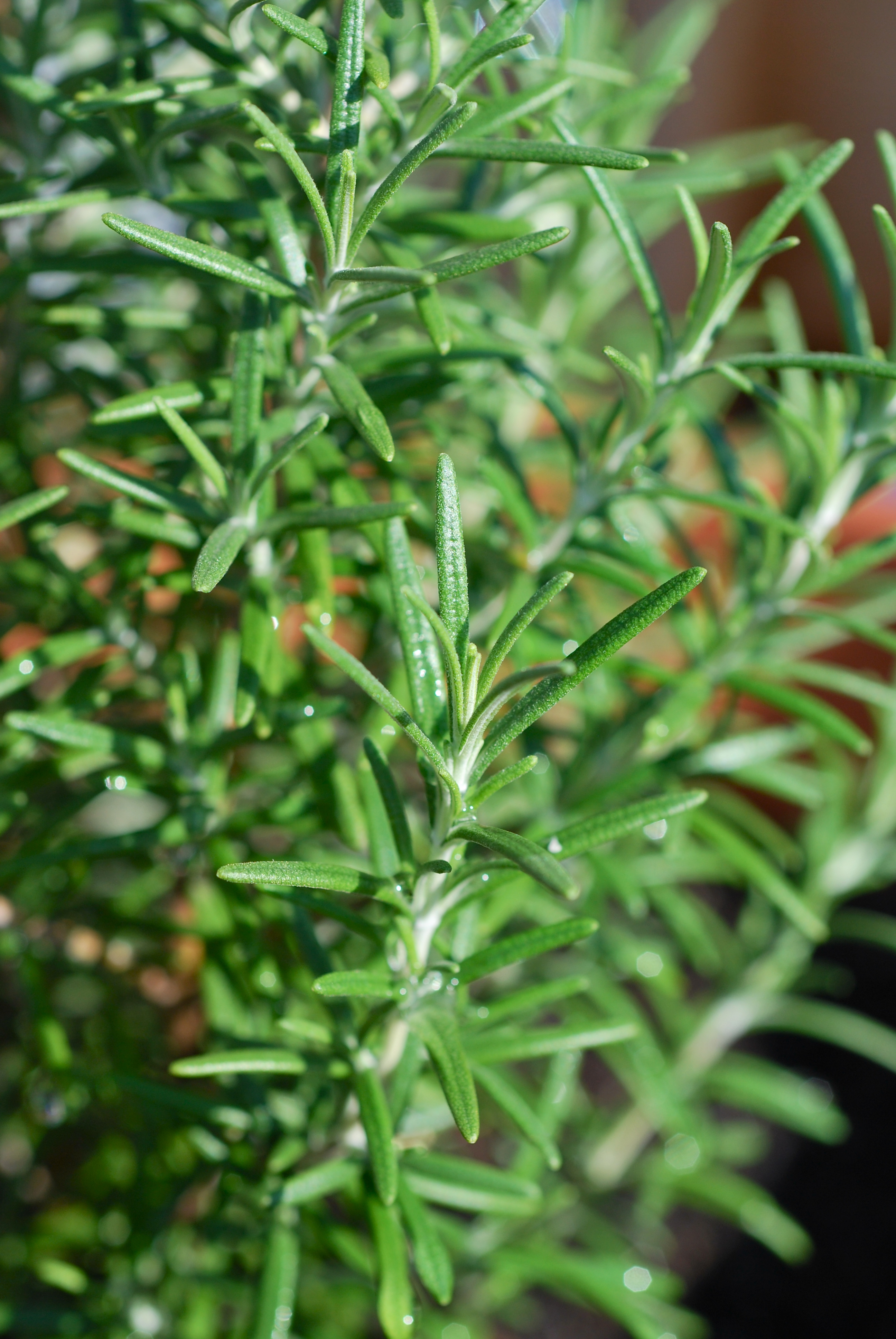
First, some gratuitous beautiful herb shots. Taken with my micro lens. (Most photos I take with my iPhone, however, so the quality and detail will vary.) Mint, thyme, and rosemary were in terra cotta pots, while chives and both basil varieties were in the box. I totally squished the basil in there. Too much in one square. These photos are from July 1, 2011.

DSC_0458DSC_0461

<—– Lovely thyme (common)

            Lovely rosemary —->

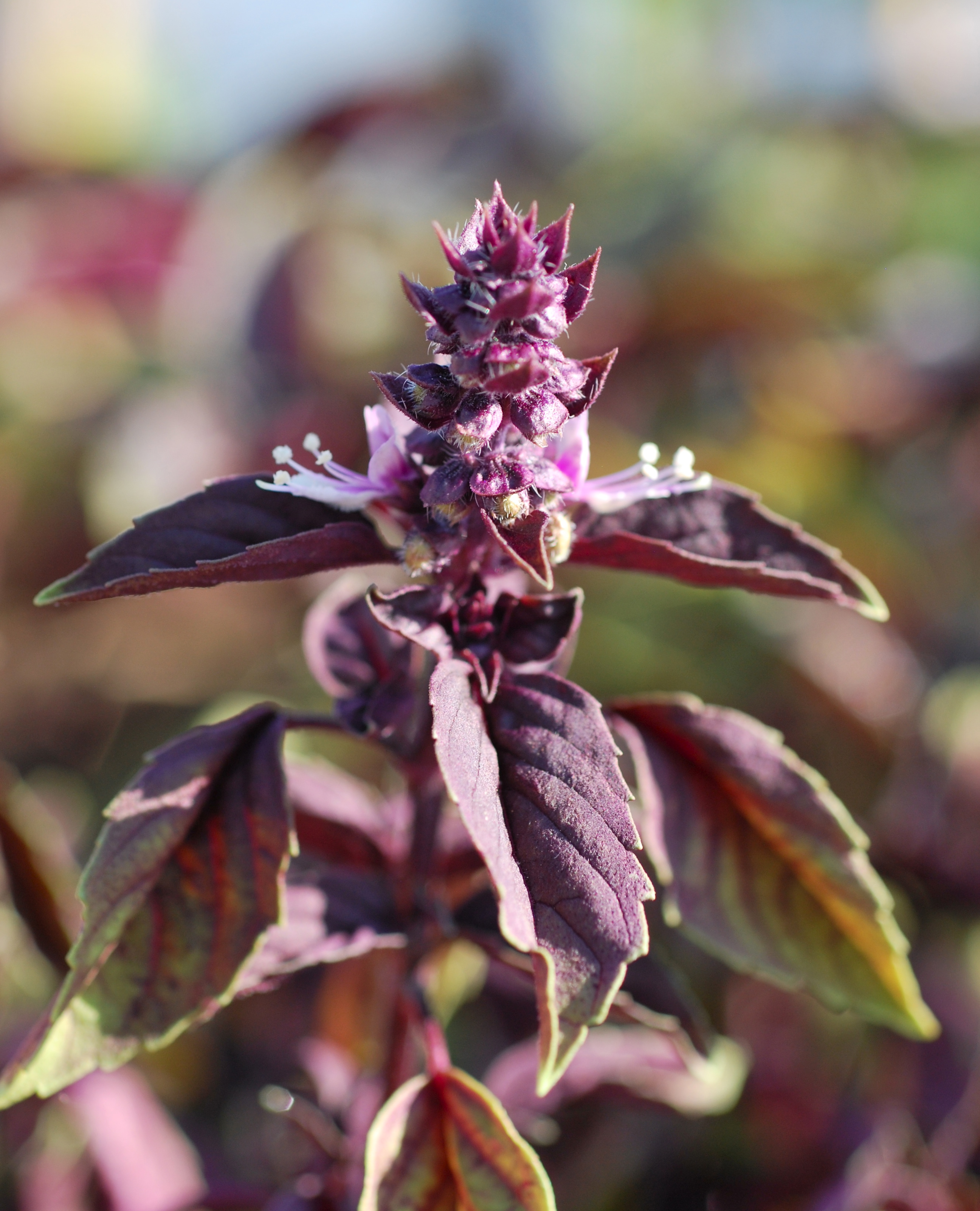
Funky purple basil. The flowers are sweet and spicy, so I let it flower just to eat them.DSC_0452

I began to sample the fruits of my labor in the early summer. Herbs, a few spring onions here and there. I was really excited to see what would happen with the tomatoes. I had planted four different kinds in these buckets; grape, cherry, yellow cherry, and a deep purple red that was supposed to yield 2″-3″ fruits. Meh.

These tomato photos are from early July – mid August, 2011.

The following gallery pretty much wraps up the first 2011 experimental season. These photos are from late July – late October, 2011. The grape and cherry tomatoes were the easiest ones to grow, so I decided to stick with the smaller varieties for the future.

Another note about water. Again, it’s really hot and dry up on the roof, and I don’t have a water up there. Tomatoes are thirsty plants, and between light rain and regular watering, I probably added about a gallon to each container every day, and a gallon and a half to the box and herbs. I used these “self-watering” containers (just the container, not the whole kit) with four gallon reservoirs. It really did help, but it was still pretty tough. When I was able to collect enough rain water, I filled the bottom of the tomato buckets all the way. I usually brought water up twice a day, morning and evening, after letting the municipal water additives dissipate or whatever they did, as someone had suggested. The plants did seem to like the water that sat around for a bit more than the water right from the tap. Rain was best, of course.